“Gotta get down to it, soldiers are cutting us down
Should have been gone long ago
What if you knew her and found her dead on the ground
How can you run when you know?”
— Ohio, Crosby, Stills, Nash & Young (1971)
One night in 1970, at three years old, I was watching the news with my family in the aftermath of Kent State. The Ohio National Guard was ordered to quell a student protest on the university’s campus. The national guard fired their guns into a crowded parking lot filled with protesters. They killed four and wounded nine. I didn’t understand the images that the news was showing. I asked my mom what had happened and she simply said that the police killed some students. My sister was already in school, and I didn’t understand she was talking about college kids, not first graders. Her words were burned into my memory.
Years later, when I asked my mom why she and my dad let me watch the news with her when I was only three, she confirmed that they declined to shield us from the news, even during the tumult of the Vietnam War era.
As I got older, I learned about the concept of Tikkun Olam (repairing the world) and it made so much sense. Repairing, or healing, the world resonated with me — especially after seeing tragedy after tragedy unfold on the nightly news. I tried to follow the idea of Tikkun Olam, donating to Amnesty International and other NGOs, and occasionally marching and rallying for important causes. I even stood outside in the blistering heat to gather petition signatures to recall my anti-LGBTQ+ mayor — even as that mayor physically stood behind me, trying to discourage people from signing.
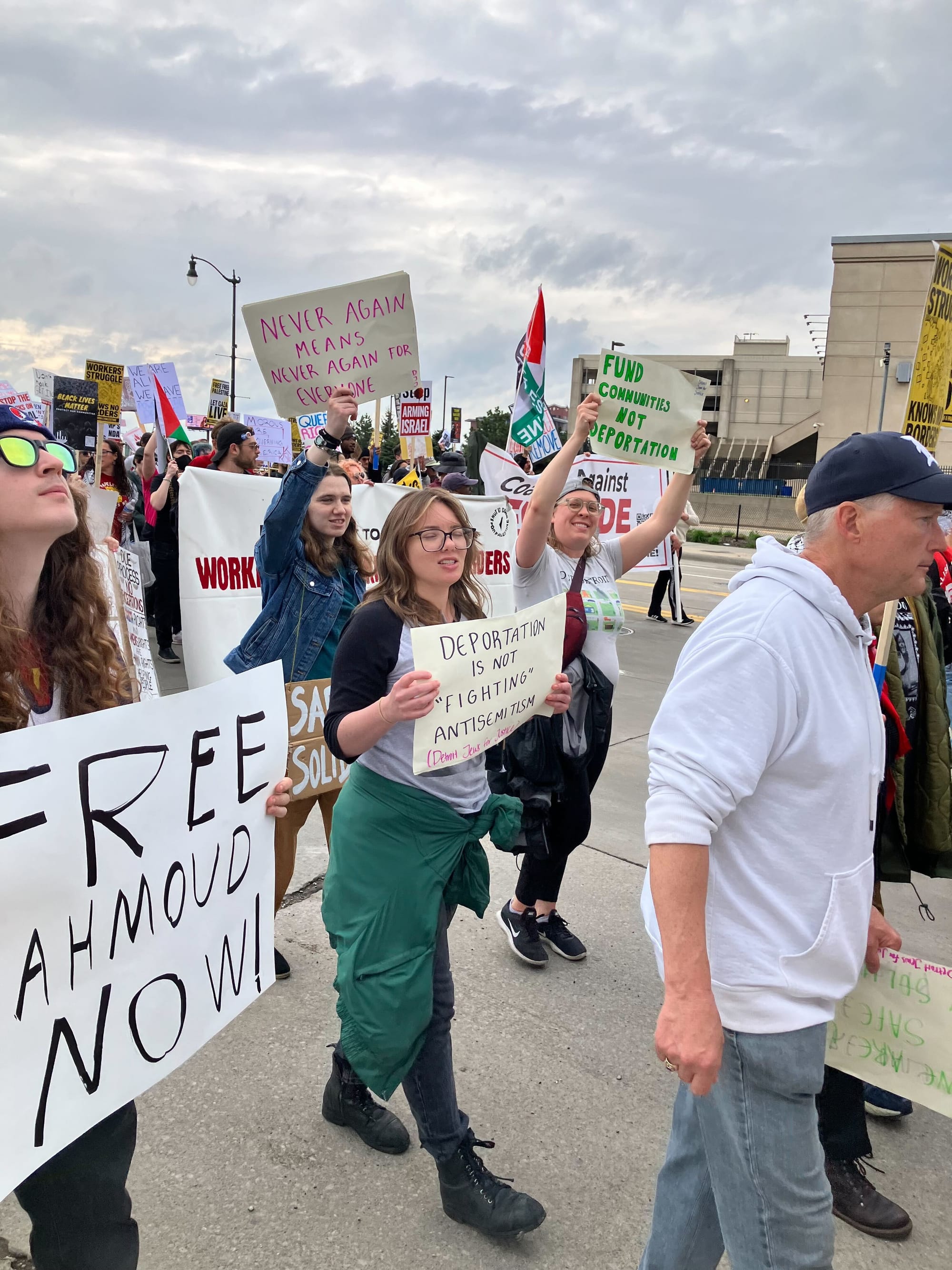
Being able to engage in direct action in my community did make me feel like I was helping. But still, I never really felt I was doing enough. In July 2025, an event popped up on my Instagram feed. A number of Detroit Jewish organizations, including Detroit Jews for Justice, were organizing a vigil in solidarity with immigrants.
Detroit Jews for Justice (DJJ) has been organizing the Metro Detroit Jewish Community since 2015, fighting for racial and economic justice. Once a part of Congregation T’chiyah, it’s now an independent organization that works with area synagogues as well as secular and unaffiliated Jews.
I had marched with DJJ years earlier, but hadn’t kept it up. I decided to go to the vigil, by myself, held at Congregation T’chiyah, which shares space at the First United Methodist Church of Ferndale. It was steamy and hot in the room and I didn’t know anyone.
Speaker after speaker talked about the dangers facing our immigrant neighbors, how the threats to our neighbors now related to what occurred during the Shoah, and what we could do to help.
It was a friendly and welcoming crowd. And I was pleased to discover that different Jewish denominations were in attendance. I sometimes feel too liberal for my Reform Judaism, but there was a group from Temple Kol Ami, a Reform temple in West Bloomfield Township, present, so I felt I was in the right place.
Issues were coalescing in my head. I was trying to follow along, listening as the speakers shared passionately about the Jewish community and where the community could help the most.
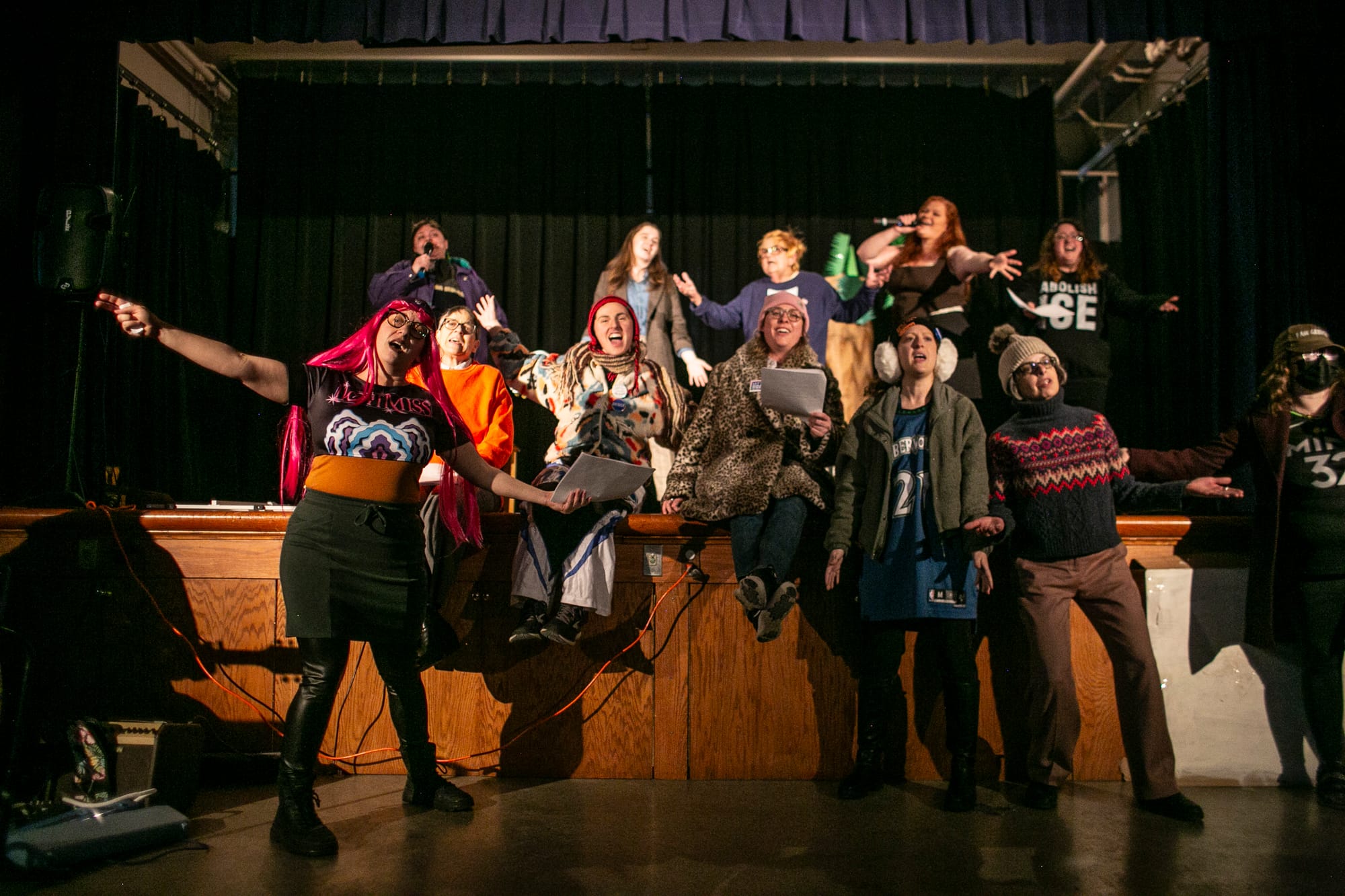
Then, one the leaders of the vigil — a stranger at the time but now someone I would consider a valued friend — stood at the bima, leading us in a beautiful Batya Levine song, We Rise.
“We rise
Up from the wreckage
Rise
With tears and with courage
RiseFighting for life
We rise.”
I feel the most spiritually calm at temple when listening to or singing from the heart a beautiful melody. And, as we strangers sang together in that warm basement, I noticed a peaceful feeling washing over me.
The beauty of the evening and the good that the groups were doing prompted me to give my contact details to DJJ’s Immigration team. And Stevie Kollin, that young organizer who led us in song, reached out for a coffee meeting.
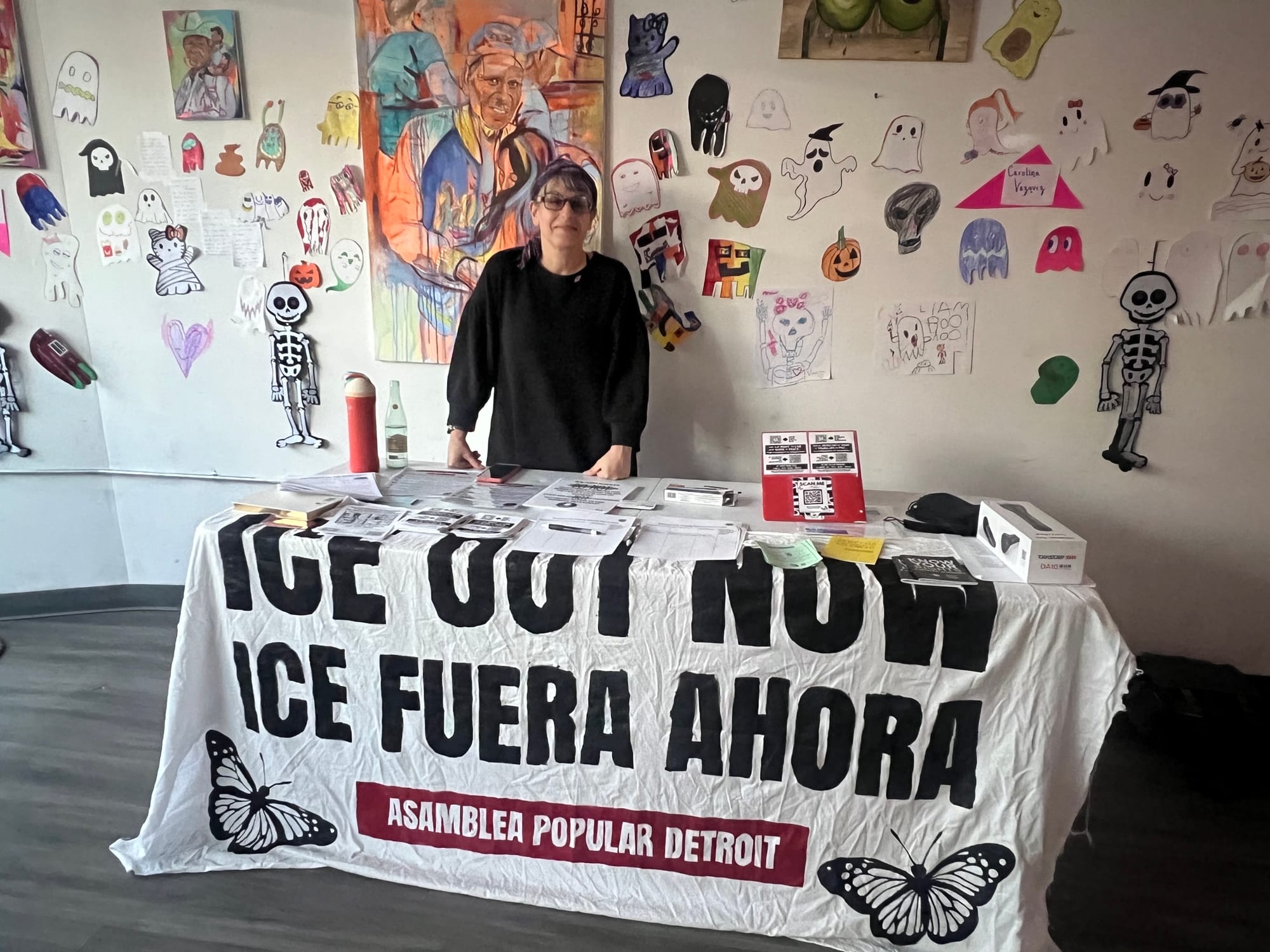
Over that cup of coffee, Stevie explained to me the goals of the Immigration team: organizing Metro Detroit Jews to gather together to defend Detroit’s local immigrant community in partnership with People’s Assembly, a local coalition of activists and organizers working to keep local immigrant communities safe. DJJ’s Immigration team works to advance PA’s organizing efforts.
I began joining members of the DJJ Immigration team once a month in Southwest Detroit’s Grace in Action Church and Collectives to canvas local businesses.
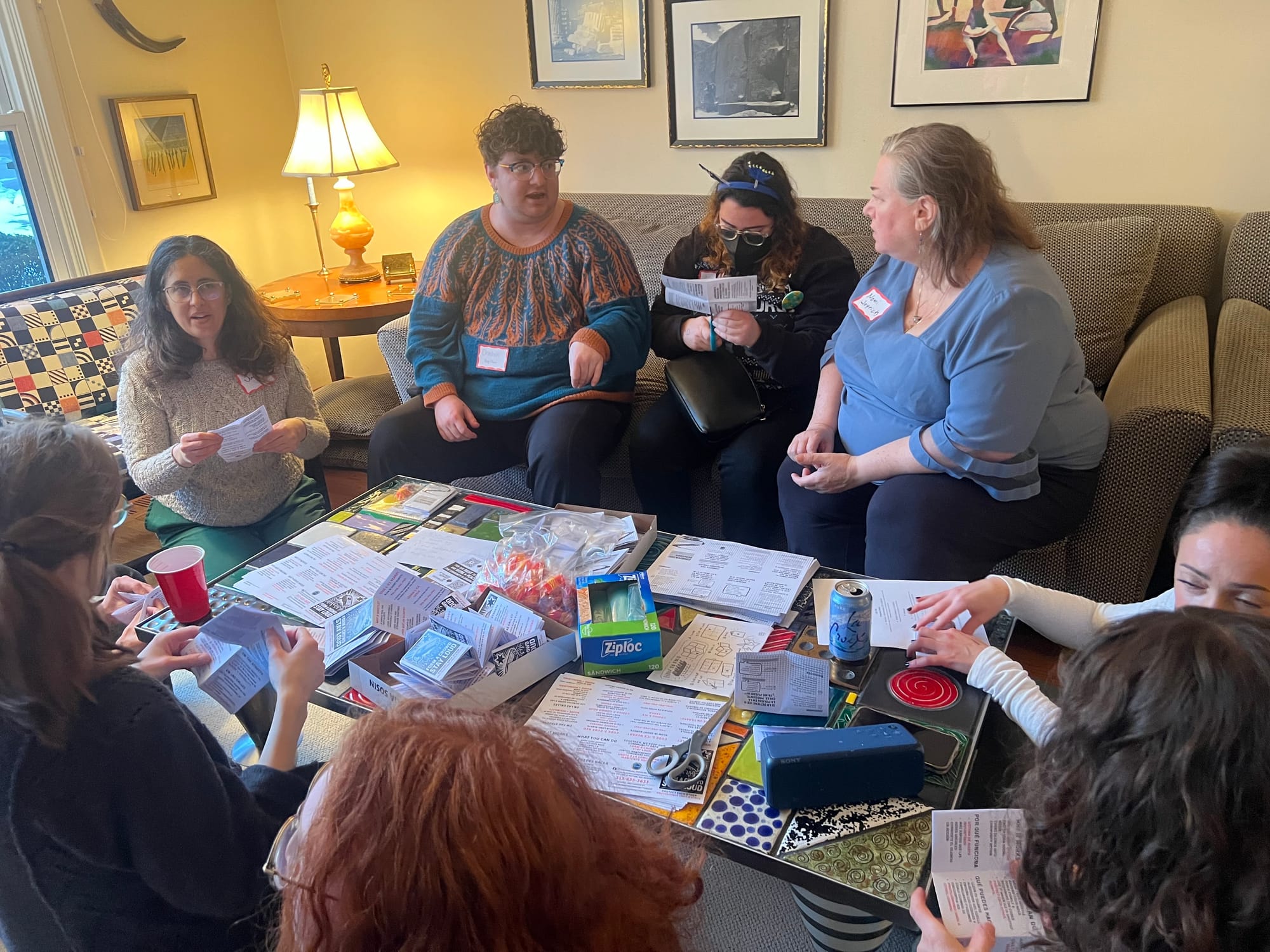
Canvassers either drive or walk throughout Southwest Detroit — rain or shine, or snow — visiting local businesses. We pass out flyers and posters that offer details about Know Your Rights training as well as point people to channels for mutual aid to our immigrant neighbors in Southwest Detroit. The canvassing project was later expanded to include distributing whistles and Know Your Rights zines.
In August 2025, we were lucky if we had four people to canvas the area. Now, people spill out of the church’s meeting room when we have our pre-canvassing training session on Saturday mornings.
Additionally, we’re forming relationships with the business owners. Many of them are aware of People’s Assembly and DJJ’s efforts and support us by displaying the posters and flyers we drop off. And they grasp the need to offer the whistle kits to their patrons. Blowing on the sharp-sounding whistles allow people to warn that ICE has been spotted. Think of it as an early warning system.
Since we’ve gotten the message out thanks to canvassing, there’s been great interest in attending the Know Your Rights training, created and presented by the DJJ Immigration team, PA, and the National Lawyers Guild. They’re both online and in person, and are geared toward businesses, schools, community groups and individuals in the Detroit area, currently focusing on our Latino neighbors in Southwest Detroit. The training sessions are ongoing: If there is a request from someone, the group will try to make the training happen.
I’ve personally taken the training twice, because I feel that this knowledge will help educate me in my rights and the rights of our neighbors.
Besides the Know Your Rights Trainings, the DJJ Immigration team, under the guidance of PA, helps out with mutual aid in the Southwest Detroit community, with volunteers bringing groceries to families afraid to go out as the danger of ICE grows.
And, as ICE is already in the community, DJJ Immigration team volunteers work with People’s Assembly to rapidly respond to ICE abductions. They try to get information about the abductee so that they can contact their family. And they even move their car from the middle of the road, if the federal agency abducted them while they were driving.
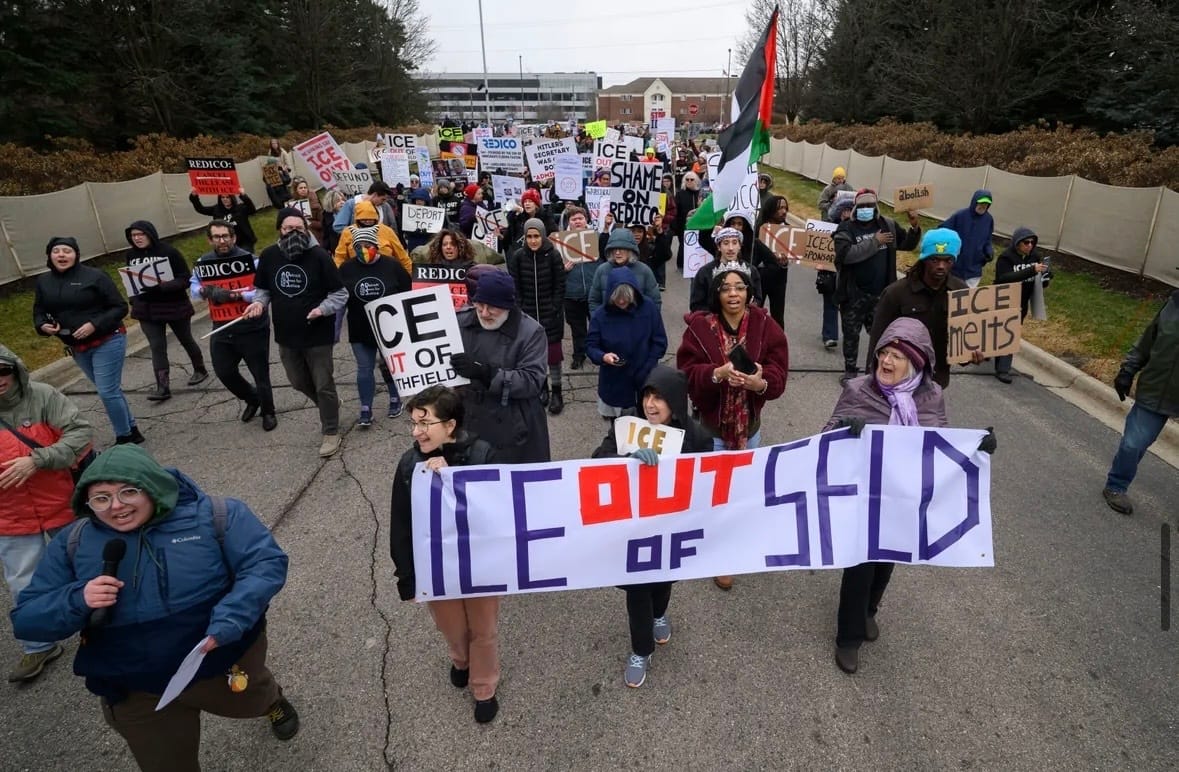
I don’t know what the future is going to look like here in Metro Detroit in the upcoming weeks and months. But I, for one, can’t sit around waiting for ICE to turn our area into a battle zone as it has for our Midwestern cousin, Minneapolis. An immigrant acquaintance recently told me she is terrified to leave her house, even though she has her U.S. citizenship. She takes her passport with her everywhere.
From that early exposure to the Kent State massacre, my eyes were open to injustice. And I have to keep pushing myself to not sit on the sidelines, and instead to make Tikkun Olam an active practice. So I’ll keep passing out flyers and whistles on the weekends, making connections and trying to help — because our immigrant neighbors don’t deserve the terror and violence ICE is inflicting upon them any more than the young people at Kent State deserved being murdered for standing up to injustice.
Comments
Sign in or become a Nu?Detroit member to join the conversation.
Just enter your email below to get a log in link.