Here in New Orleans, we are used to holding our collective breath in August and September — peak hurricane season in the Gulf (of Mexico). When a storm appears, we track it relentlessly. Does that tiny jog mean it’s going to hit to the west of us, putting us on the windy, but dryer side of the storm? Did we move back into, or out of, the aptly named “cone of uncertainty”? If the hurricane is coming, we know how to prepare — replace all the flashlight batteries, put the outdoor toys in the shed — or, if it’s bad, load up the car and get out of town.
When the storm isn’t coming, the action plan turns into something else — relief, sure, but also a profound sense of sadness — because we may be safe, for now, but that storm will still be hitting somewhere, impacting families and businesses in a community that could be my own.
This is how I’ve felt watching the events of the past few weeks play out in Minneapolis. In south Louisiana, we seem to be experiencing the waning days of Operation Catahoula Crunch, which imported 250 border patrol agents with the preposterous goal of arresting “5000 dangerous criminals” from December through February. That they have faded into the background with, at best estimate, only 560 arrests, feels like we’ve dodged the Big One.
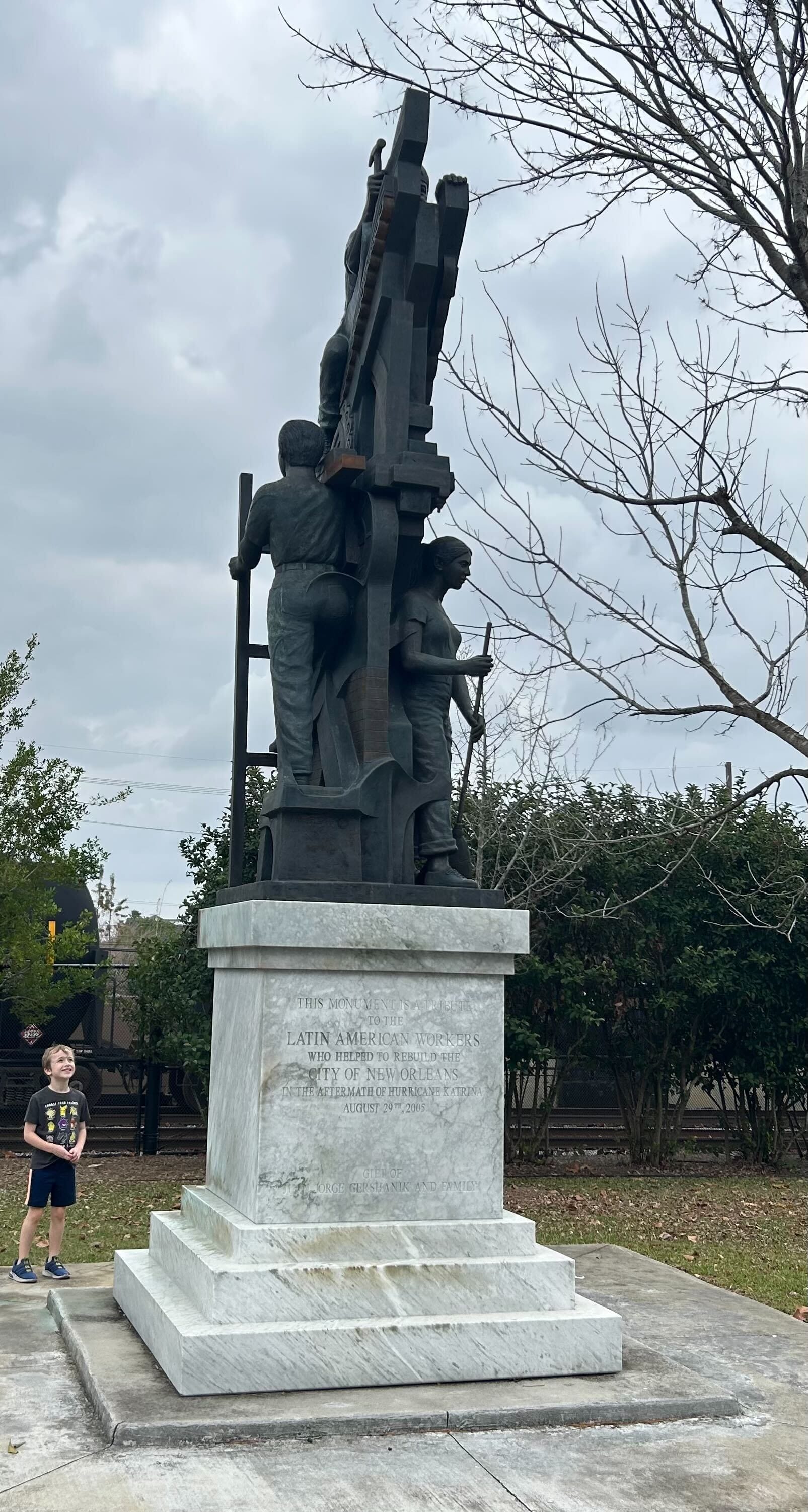
To be clear, in a small metro area like New Orleans, 250 agents still made a big impact, arresting hundreds but terrorizing thousands more. Our region is home to tens of thousands of immigrants — mostly Latin American, with a small but mighty subset of Vietnamese (similar climate). Twenty years ago, it was the hard work and tirelessness of immigrants that brought us back when our Big One hit. Visit Crescent Park alongside the Mississippi River, and you will walk by a giant monument dedicated to the Latin American workers who helped rebuild the city of New Orleans after Hurricane Katrina. Come down for a visit and you’ll see countless Mexican, Honduran, Dominican restaurants, food trucks and grocery stores.
I wasn’t here for Katrina, but for the past fifteen years I have lived in a neighborhood with a large Latino population. My husband, who works in construction, has worked side by side with hard-working, highly skilled craftsmen (and women) who are proud to be in this country, contributing to the economy and building better lives for their children. My kids are lucky to go to a school where we celebrate all cultures, and every communication home is shared in both English and Spanish.
In December, immigrant communities in New Orleans were forced into hiding by the threat of ICE and CBP raids and arrests. Restaurants and construction projects shut down, schools experienced unsustainable rates of absences, and churches canceled services to minimize the risk to their congregants.
My kids' school community sprang into action to provide as much support and protection as possible to ensure that all our kids could continue to participate in school for as long as this occupation would last. As our family was preparing to light the menorah, we joined the coalition of volunteers (both teachers and families) supporting our neighbors. The kids started going to school 45 minutes early every day (no small feat) so that I could participate in a neighborhood patrol. In addition to our own shopping, we went on multiple grocery runs and quietly delivered to families sheltering in their homes. I attended a training on peacefully observing federal agents. We talked to our kids about our own families’ immigrant stories; they instinctively understand that their friends and classmates should not be targeted when they’ve done nothing wrong.
I’m a Jewish American who grew up in the 1990s in metro Detroit. The Holocaust isn’t some abstract idea. My 6th grade Sunday School teacher at Temple Shir Shalom was the daughter of survivors. For all the times I visited the Holocaust museum over the years, it was never the same twice. Each trip was informed by the books I’d read and the firsthand accounts of survivors. You don’t have to tell me how this story could end.
Like hurricane season, I am relieved that things have settled down in New Orleans — and devastated for folks in Minneapolis and elsewhere dealing with the violence of this man-made disaster. We are staying vigilant here and will continue to stand in solidarity with every impacted community. We can’t stop what’s happening, but in bearing witness and continuing to stand up for our communities, we can change the course of how this story ends.
Comments
Sign in or become a Nu?Detroit member to join the conversation.
Just enter your email below to get a log in link.