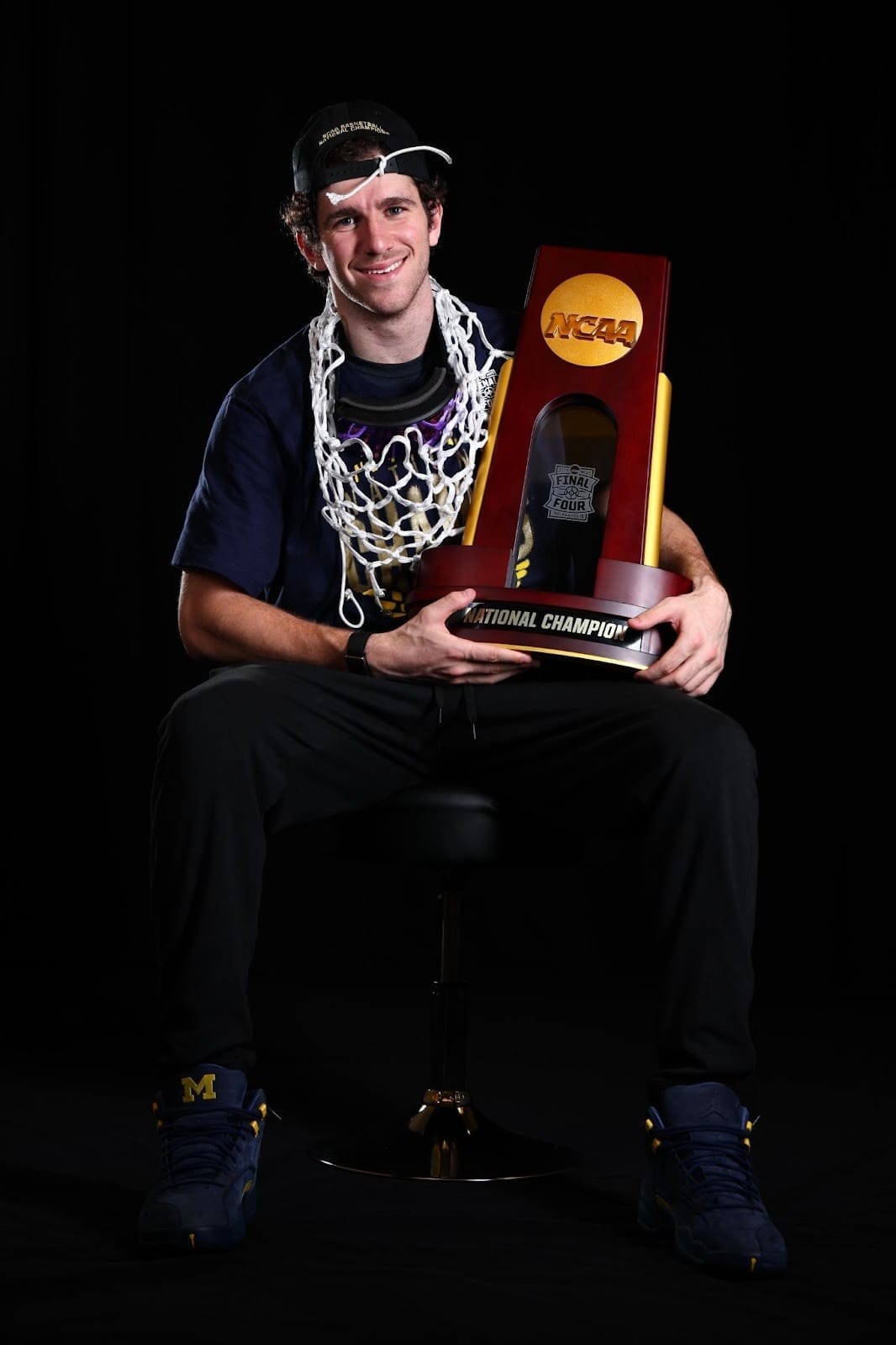
Following a historic national championship run with the University of Michigan, Harrison Hochberg — the first Jewish member of the University of Michigan basketball team to win a National Championship — discussed the surreal nature of the victory, the complexities of being a Jewish role model in elite athletics, and the enduring legacy of his grandfather.
On the Championship High
Adam Finkel: How have the last 48 hours felt after securing the national title?
Harrison Hochberg: It’s been surreal. I grew up a massive Michigan fan, so I’ve been joking with people that this is the peak of my life and it’s all downhill from here — and I’m completely okay with that. It’s a once-in-a-lifetime achievement.
AF: Given how stiff the competition was through the season, did you expect to be standing there at the end?
HH: I wouldn't say it was a surprise. We knew early on there was a chance for this. One of my teammates, "Yax," was talking back in November about holding up a "Shock the World" sign when we won. That’s been the expectation since day one.
On Community and Outreach
AF: What has been your engagement with the Detroit community?
HH: A few years ago, my teammates and I led a basketball camp for the children at S.A.Y. Detroit, founded by Mitch Albom. It was an amazing experience to connect with the Detroit community. As long as we're in the position that we are, I feel like we have an obligation to give back to those that deserve it. Even though Detroit is an hour away, I’d like to do more there.
I’ve done my best to expand that connection to the Ann Arbor community as well, specifically through work with the special needs community and Team Impact. We even brought a young man named onto our team as a full member, which has been incredibly rewarding. Whether it is through the T-Wall Foundation or these local camps, I believe in using our visibility to make a tangible impact wherever we can.
Faith, Identity, and the Final Four
AF: You’ve reached a rare level as a Jewish athlete; joining your good friend Danny Wolf, and Southfield’s Steve Fishman as a Michigan basketball player. What does that role-model status mean to you?
HH: Growing up on the Upper East Side, I didn't really have a Jewish athletic role model to look up to. When I went to boarding school, I was one of maybe six Jewish kids in a school of five hundred. Being a minority in that demographic was challenging, but my faith kept me strong. Now, having the opportunity to be that role model for kids like me is something I take a lot of pride in.
AF: This year, the Final Four coincided with Passover. How did you manage the holiday while in Indianapolis?
HH: It was unique. We actually reached out to Zabar’s — the legendary New York establishment — and they sent a massive Passover spread to the team hotel. We had a table with the managers, said the prayers, and Coach May even partook a bit. The hardest part was the team meals; there were two or three days where they served deli sandwiches for lunch. I (avoided all bread), the team nutritionist asked "Why are you skipping the carbs?" and I just had to say, "I can't do it right now."
The Small World of Jewish Athletics
AF: Did you connect with other Jewish players or coaches during the tournament?
HH: Definitely. We played Purdue in the Big Ten Championship, and their player Omer Mayer and I shared a handshake afterward; we just said, "Am Yisrael Chai."
I also have a deep respect for Coach Bruce Pearl at Auburn. Last year, when we played them, he invited the family of Edan Alexander — who was being held in Gaza — to the game. My teammate Danny Wolfe and I met with Edan’s father and brother. After the game, I went up to Coach Pearl and said, "Am Yisrael Chai." He gave me a huge bear hug and said, "We’re in this together, brother." It’s a small community, but we stick together.
On being a Jewish Role Model
AF: Have you faced any challenges or issues regarding your Jewish identity during your time at Michigan or while competing?
HH: Yes. When I post content for NIL brands, such as my video with Zabar's, I try to keep politics out of it. I focus on standing up against Jewish hate and antisemitism, but unfortunately, there are people in the world who view anything associated with being Jewish as a negative. Because of this, I have received a fair share of hateful direct messages and threats.
AF: How do you deal with that kind of negativity?
HH: I don't let it bother me; to me, it's just noise. I know that I am doing the right thing by using my platform for good. I simply block out the hate and focus on the fact that for every hateful message I receive, there are likely other kids who are positively impacted by what I'm doing. I want to be a voice against antisemitism as much as I can. While the world can be a polarizing place and people see things in different ways, I am going to continue using my platform to speak out. If that upsets some people, it isn't a problem for me.
Legacy and the "Michigan Man"
AF: You’ve mentioned the profound impact your grandfather, Ira Harris, had on your life. I knew your grandfather and it was evident when I visited his office before his passing how much he revered family. How did his lessons guide you to this moment?
HH: My grandfather was the most impactful person in my life. He taught me three things: the Golden Rule; that those with the opportunity to give back have an obligation to do so; and that your word is your bond.
Five seconds after we won, I went from screaming in excitement to absolute tears because I wished he could have been there. He brought me to my first game at the Big House when I was seven weeks old. His last game was the 2021 upset over Ohio State, and I’ve never seen him happier. Being able to create my own Michigan memories now feels like a full-circle moment.
Looking Ahead
AF: How has this run changed your perspective on what comes next professionally?
HH: I want to stay in sports business — perhaps as an agent or working for a sports investment firm. I was told a million times that I wouldn't play at Michigan, but I passed on other Division I offers just for the chance to walk on here. To end that journey by hanging a national championship banner is the greatest achievement of my life.
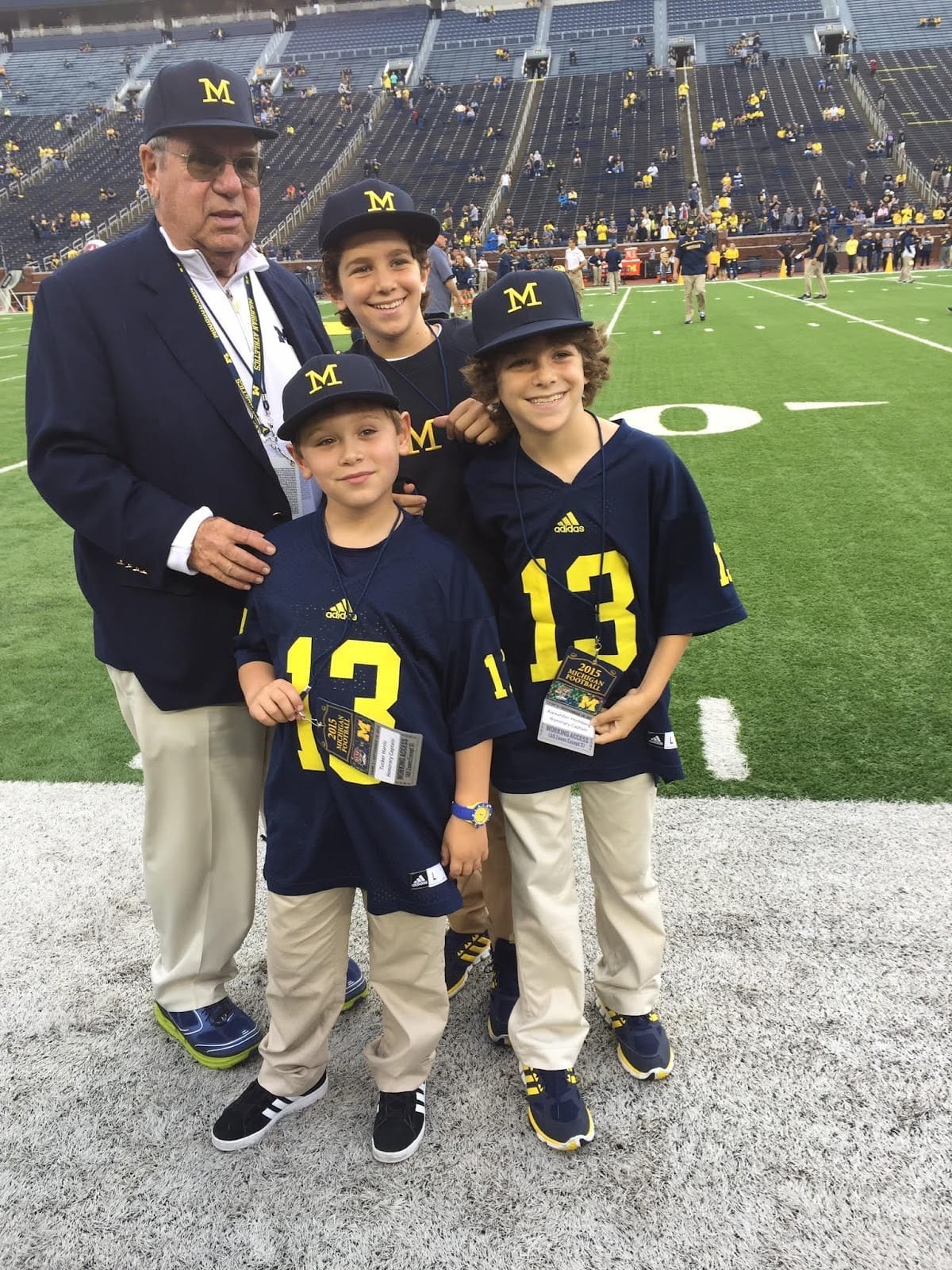
Harrison Hochberg with his cousin Tucker Harris (front) and brother Alexander (right) alongside their grandfather Ira.
Comments
Sign in or become a Nu?Detroit member to join the conversation.
Just enter your email below to get a log in link.