When Rabbi Alan Alpert and his wife Anna landed in Muskegon 50 years ago, neither imagined that they would spend the next half century at one of the smallest congregations in Michigan. As they prepare to move to the sunnier climes (Oakland County) next month, my mind is wandering back to a time before their family or ours found its way to Temple B’nai Israel.
Growing up in Detroit and Oak Park, my own family belonged to Jewish Parents Institute, an association that flourished outside the synagogue universe. When I was 12, MISCO (Michigan Steel Castings Company) spun off an aerospace operation that would have moved my dad’s job and our family to 200 miles to the Whitehall/Muskegon area. My dad was determined not to move to where we’d be “the only Jews in town,” so we migrated another 2000 miles west to Los Angeles. A year later we headed back to Michigan.
In Muskegon, Temple B’nai Israel quickly became our spiritual home. I had my bar mitzvah that first year. My mom took on leadership roles and taught Hebrew. My father became synagogue president. He picked up the young Alperts at our local airport on a summer day in 1976. Dad took them sailing before dropping them off at the lakeside home of Richard and Sylvia Kaufman, close to where we were living in North Muskegon.
Love at first sight would be a good way to sum up the congregation’s response to this transplanted Santa Monica couple. Despite the challenges of winter driving, the Alperts made fast, deep connections with the Jewish and Christian communities. Forty years after they first flew/sailed in, those relationships helped lead to the creation of the Kaufman Interfaith Institute at Grand Valley State University.
For Anna, who lost four relatives to the Holocaust, Muskegon was a good place to bring history alive through lectures and memory plays like Anne and Emmett. That drama, which she co-directed with their son David a few years back, told the story of Anne Frank and Emmett Till connecting in the afterlife.
Like many of the Alperts’ contributions to our community, this show sparked a valuable conversation about the link between racism and antisemitism. In the talkback one of the black audience members mentioned that North Muskegon, where I went to high school, was a sundown town. This was news to me, the former editor of the student newspaper. I later confirmed it with my friend and former Muskegon Community College President Dale Nesbary. Yes, he told me, black teens visiting North Muskegon were routinely stopped by police when driving after dark.
Close to many of the ministers in town, Alan became a strong advocate of interfaith gatherings. Typical was a symposium on “Issues Which United and Divide Jews and Christians.” Education was a key focus of the Alpert family. Their daughter Aleza, became a special ed teacher at the Frankel Jewish Academy. Multi-talented Gilana served as a cantor and theater educator who also taught classes on human sexuality. With her mother, she directed a play set during the Holocaust.
While the Alperts were front and center in 1988 at a gala 100th anniversary celebration of Temple B’nai Israel, featuring Yascha Heifitz, much of their presence revolved around smaller gatherings. Shabbat at the homes of congregation members often attracted special guests from around the country. From lectures by visiting scholars like rabbi/philosopher Eugene Borowitz, to touring Klezmer bands, the synagogue has long been a draw for the interfaith community.
The synagogue also drew impressive audiences for local events including a Marc Chagall art exhibit.
For Anna, a dance instructor and choreographer, leadership of the Anderson Center for Holocaust and Genocide studies has been an opportunity for her to share her story as the daughter of Holocaust survivors, always with an emphasis on interfaith collaboration.
David’s directing career is focused in New York, but he has also found time to direct a number of shows in West Michigan including Runaway Princess, an original children's musical co-written by Broadway actress and singer Kate Reinders, who recently moved back home to the Muskegon area.
Gilana’s untimely death in 2007 is memorialized in a inspiring garden next to the synagogue sanctuary. Her Frauenthal Theater memorial drew a crowd of over 1,000 people, whose lives she had touched.
At a farewell dinner Monday led by Rabbi Alpert’s successor, Rachel Vandyke, I was reminded of how much the Alperts meant to my parents. My dad always considered hiring Alan to be one of the crowning achievements of his temple board career. My mother, who always lived in big cities prior to Muskegon, worried that Alan and Anna would skip town and migrate back to their extended family in California.
Over time Michigan won them over. At Meijer — which carried Passover matzoh and gefilte fish at Alan’s request — seemingly everyone paused to say hello to the rabbi. All of us in Muskegon share special memories of the Alperts. In my case, it’s the many times Alan and I drove out to Mona View Cemetery to memorialize my parents on the summer and winter days of their passing.
Saying kaddish together is both a step back in time and a tribute to the persistence of our small, vibrant Jewish community. Their yahrzeits are always tempered by a line Anna likes to quote from Anne and Emmett: “As long as someone remembers you, you remain alive.”
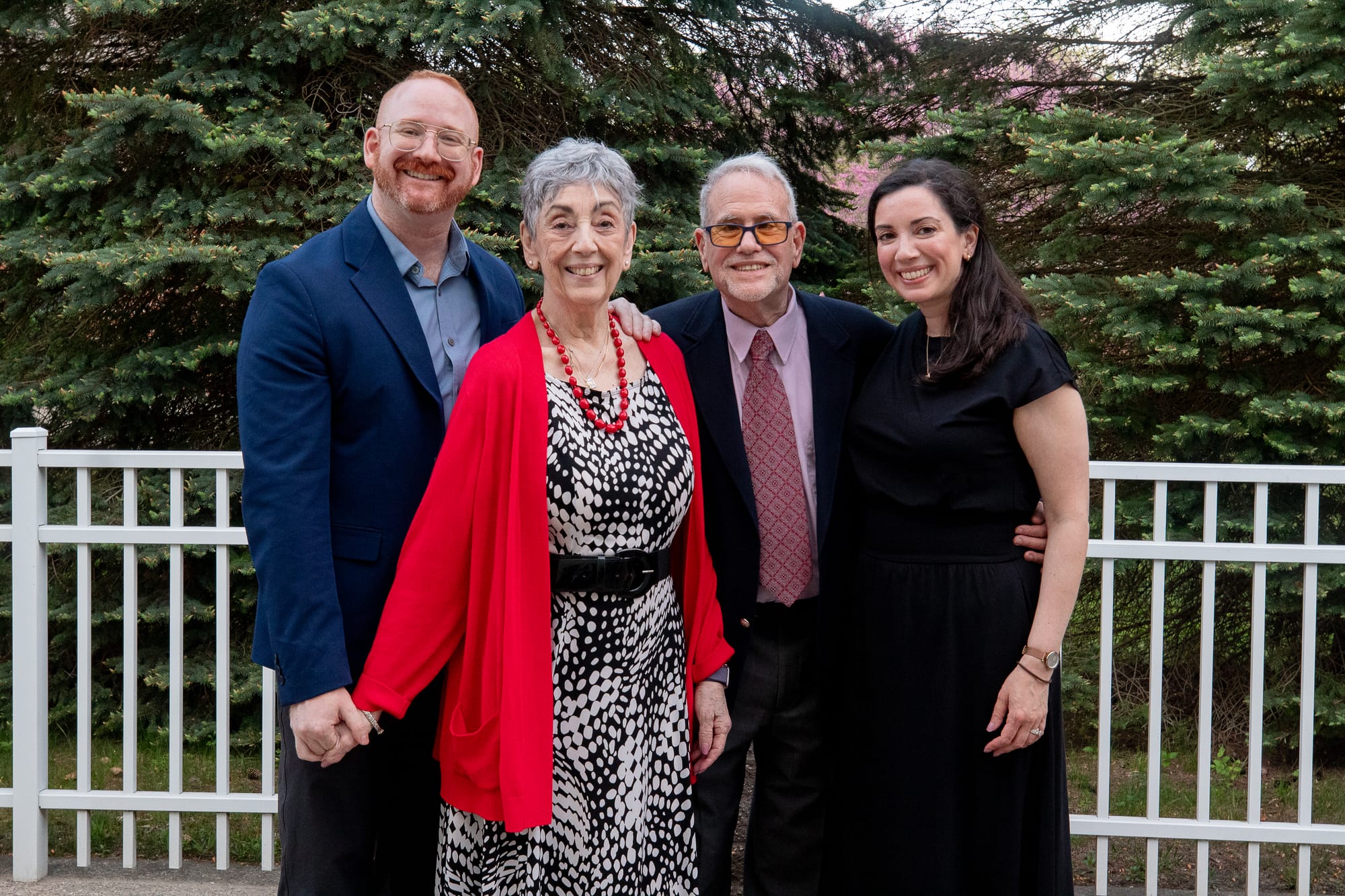
Alpert Family Photo by Heath Vandyke
Roger Rapoport (rogerrapoport.com) is the producer of the new play about the largest rabbi arrest in American history, When The Rabbis Came To Town. It premieres June 17 at the Waterworks in St. Augustine, Florida.
Comments
Sign in or become a Nu?Detroit member to join the conversation.
Just enter your email below to get a log in link.